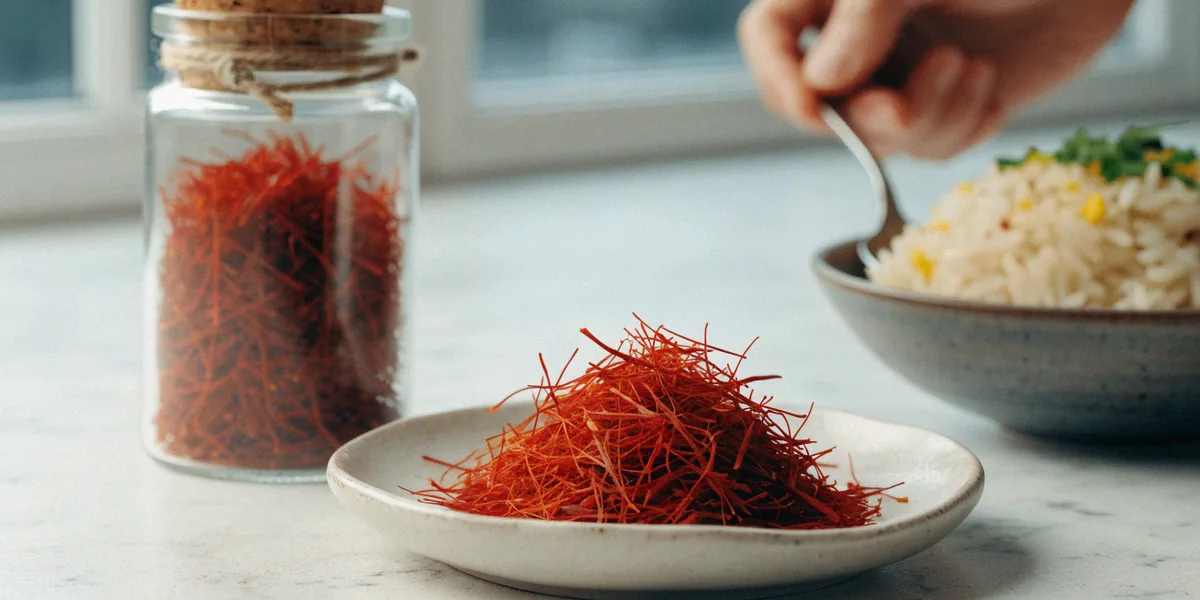
Saffron: Our Buying and Cooking Guide for Spanish Food Lovers
We still remember the first proper paella Valenciana we ate in Spain — a wide, shallow pan set down on a sunlit terrace near the Albufera, the rice stained a deep amber and scented with something floral, earthy and impossible to place. That something was saffron. Back home in the UK, we tried to recreate it with a cheap supermarket jar and the result tasted of nothing much at all. That disappointment sent us down a rabbit hole of grades, fakes, PDO labels and proper Spanish stockists, and this guide is everything we learned. If you cook Spanish food seriously — paella, fabada, arroz negro, tapas recipes of every stripe — saffron is the one ingredient worth getting right.
What Is Saffron and Why It Matters in Spanish Cooking
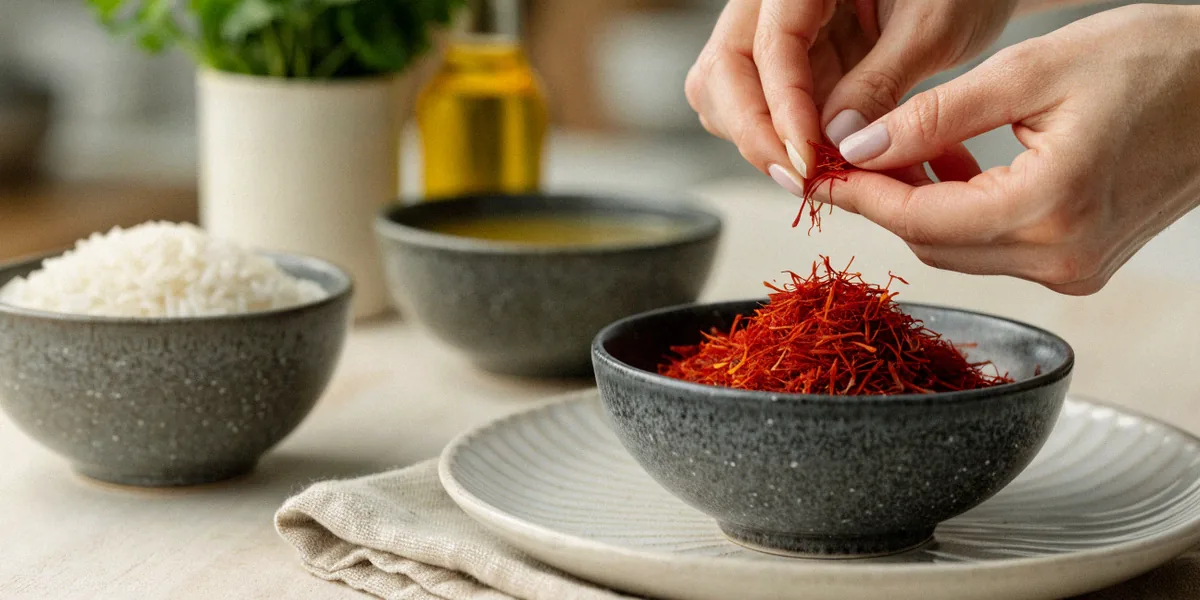
Saffron is the dried stigma of Crocus sativus, a small autumn-flowering crocus that produces no useful seed and must be propagated by hand. Each flower yields just three crimson threads, which are picked at dawn before the heat of the day can damage them, then toasted and dried. In Spain, the heartland of production is La Mancha, where the dry, windswept plateau around towns like Consuegra and Madridejos has been growing the crop for centuries. La Mancha saffron holds PDO (Protected Designation of Origin) status, which means the threads must be grown, harvested and processed within the region to a defined standard.
Why does it matter so much in Spanish cooking? Because saffron does two jobs at once. It gives colour — that unmistakable golden-orange glow — and it gives flavour, a honeyed, hay-like, faintly metallic note that cuts through rich stock and olive oil. Without it, a paella is just yellow rice. With it, the dish tastes like Spain.
The Labour Behind the World’s Most Expensive Spice
The economics are brutal and worth understanding before you complain about the price. It takes about 150,000 crocus flowers to produce 1kg of saffron. Every one of those flowers is picked by hand, and every stigma is separated by hand, usually within hours of harvest. A skilled picker might gather 60–80 grams of flowers in a day, which yields a few grams of finished threads at most. This is why saffron costs more per gram than most precious metals — and why anything suspiciously cheap should be treated with suspicion.
Saffron’s Role in Spanish Food: Paella, Fabada, and Beyond
Saffron runs through Spanish regional cooking like a thread of gold. It is essential in paella Valenciana and seafood paellas, in arroz negro coloured black with squid ink but still perfumed with saffron, in the Asturian bean stew fabada, in Catalan fish stews, and in simple dishes like saffron alioli or a warm potato salad. It also appears in desserts and even in some Spanish liqueurs. Once you start cooking with real saffron, you notice it everywhere.
How to Buy Saffron in the UK: Grades, Brands, and Red Flags
Buying saffron in Britain is a minefield. The spice is expensive, heavily adulterated and often mislabelled, so it pays to know exactly what you are looking at before you hand over £10 or £15 for a tiny jar.
Understanding Saffron Grades: Coupe vs. Superior
Spanish saffron is graded mainly as coupe and superior (sometimes called superior or selecto).
- Coupe: Only the deep red part of the stigma, with the pale yellow base removed. Strongest colour and flavour, and the grade we buy for paella.
- Superior: The whole stigma including the yellow style. Slightly milder and cheaper, perfectly good for stews and longer-cooked dishes.
- Standard / commercial: Often blended or lower quality. We avoid this for Spanish cooking.
If a jar does not state a grade, assume it is the lowest one.
Trusted UK Stockists and What to Expect to Pay
We buy our saffron from Brindisa, the Spanish food importer with shops in London and a strong online store, and we also rate Sous Chef for its well-labelled Spanish saffron and excellent recipe resources. The Spicery is another reliable option if you want smaller quantities or a broader spice selection. Expect to pay roughly £8–£15 for a 1g jar of decent La Mancha coupe, and more for PDO-certified stock. Spanish saffron often carries the La Mancha PDO label — look for it on the packaging, along with a harvest year.
Spotting Fakes: Safflower, Turmeric, and Dyed Threads
Fake saffron is everywhere. The most common swaps are:
- Safflower (often sold as “Mexican saffron” or “azafrán de las Indias”) — orange-red threads with none of the flavour.
- Turmeric — used to bulk out ground saffron and add yellow colour.
- Dyed threads — real-looking strands soaked in artificial colour that bleeds instantly in water.
A quick test: drop a few threads into warm water. Real saffron releases colour slowly and the threads stay red. Fakes bleed fast and the threads turn pale or disintegrate.
Storing Saffron to Preserve Flavour and Potency
Saffron is fragile. Light, heat, air and moisture all strip it of colour and aroma, so treat it like the precious thing it is. Keep threads in an airtight container — a small glass jar with a tight lid is ideal — stored in a cool, dark cupboard away from the hob and the kettle.
Whole Threads vs. Ground Saffron: Which Lasts Longer?
Whole threads last two to three years if stored properly. Ground saffron loses potency within months, sometimes weeks, because the increased surface area exposes the pigments to oxygen. We never buy ground saffron; we grind or crush threads ourselves just before use. A small jar from a UK deli like Brindisa should be used within a year for the best results, even though it will technically keep longer.
Common Storage Mistakes That Ruin Saffron
- Keeping it in a spice rack next to the cooker, where heat and steam destroy it.
- Storing it in a clear jar on an open shelf in direct sunlight.
- Leaving the lid loose so the threads absorb kitchen humidity.
- Grinding a whole jar in advance “for convenience” — it will be dead within weeks.
How to Cook with Saffron: Blooming, Dosage, and Pairings
The single biggest mistake home cooks make is throwing saffron threads straight into a dish. They need to be bloomed first — steeped in a warm liquid — to release their colour and aroma.
Blooming Saffron: Stock, Wine, or Water?
Crumble the threads between your fingers into a small bowl or cup, then add a few tablespoons of warm — not boiling — liquid. Warm stock is our default for paella and arroz dishes. A dry white wine or a dry sherry works beautifully for seafood and chicken. Plain warm water is fine if you do not want to introduce extra flavour. Leave it to steep for 15–20 minutes; the liquid should turn a deep, glowing amber. Add the whole lot, liquid and threads, to the pan.
How Much Saffron Per Dish? A Practical Guide
A pinch of saffron equals roughly 20–30 threads, enough for a paella for four. That is the benchmark we work from. For a large fabada or a big batch of stew, use 40–50 threads. For a saffron alioli or a dressing, 8–10 threads is plenty. More is not better — overshooting gives a medicinal, metallic edge that ruins the dish.
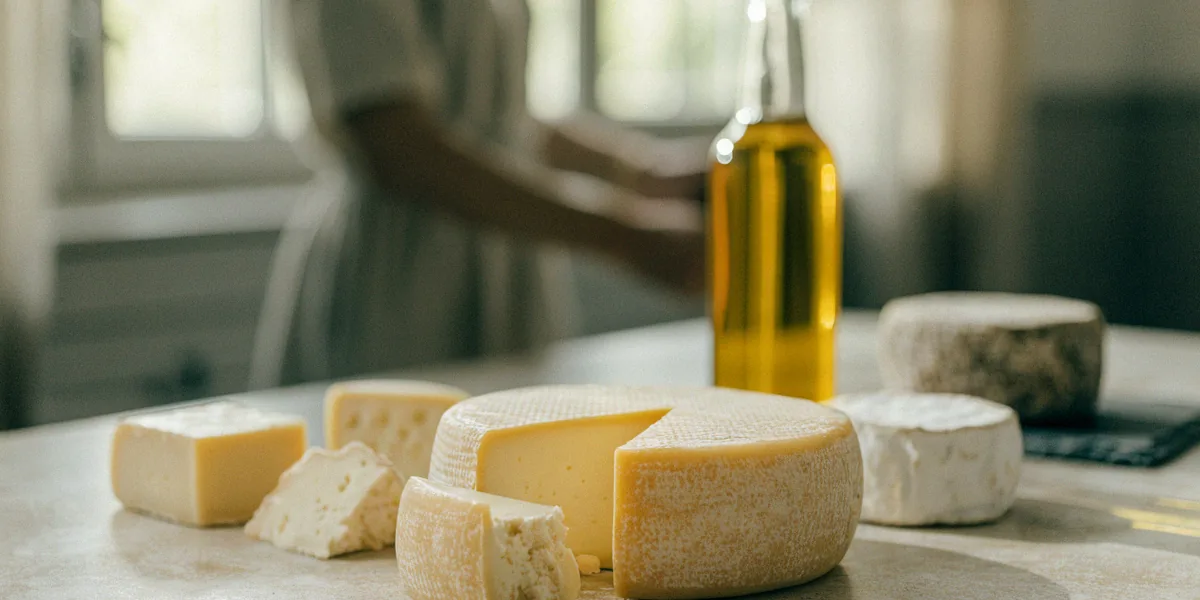
Pairing Saffron with Spanish Cheese and Sherry Vinegar
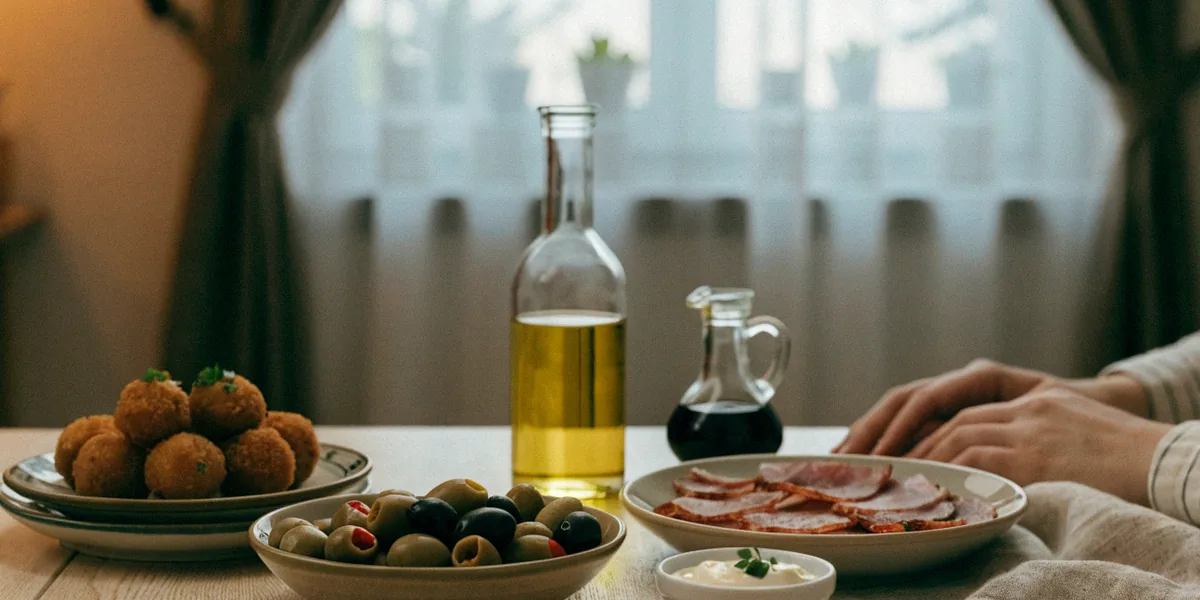
Saffron dishes love acidity and salt. Sherry vinegar and Spanish cheese are classic pairings with saffron, and we build most of our tapas spreads around them. A few ideas:
- Manchego or Idiazábal shaved over a saffron-scented potato salad.
- A few drops of sherry vinegar whisked into saffron alioli to sharpen it.
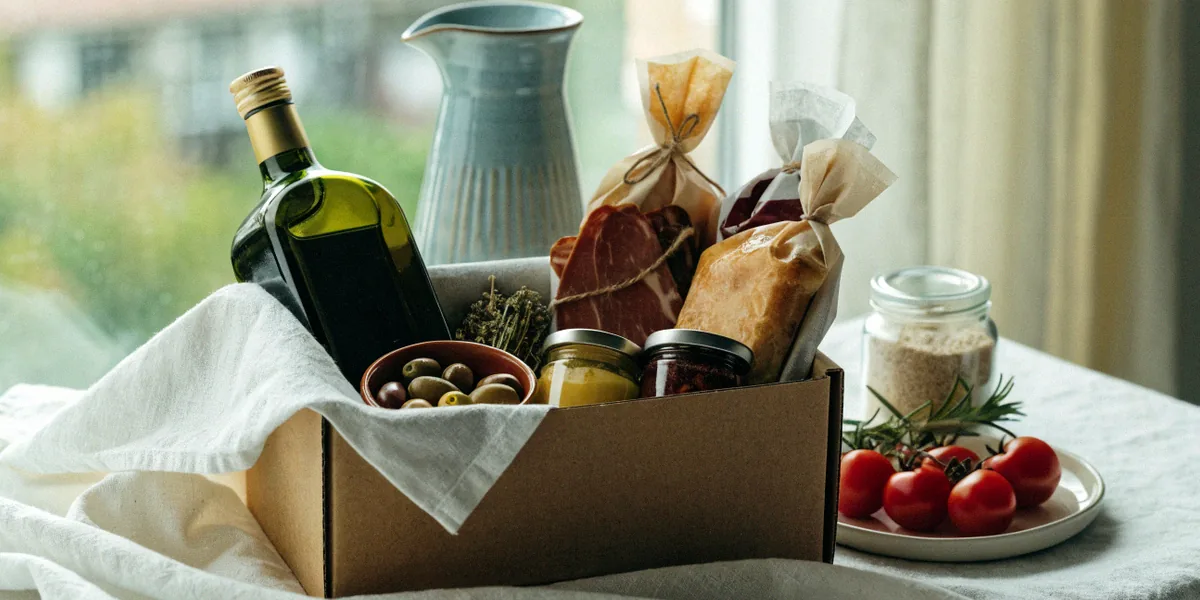
- A food hamper of Spanish cheese, olives, jamón and a bottle of sherry vinegar, laid out alongside a pan of paella.
Our Favourite Spanish Recipes Using Saffron
These are the three dishes we cook most often at home, and each one shows saffron off in a different way.
Paella Valenciana: Our Go-To Recipe
The original paella from Valencia uses chicken, rabbit, flat green beans (ferradura), butter beans (garrofó), tomato, olive oil and, crucially, bomba or Calasparra rice. We bloom our pinch of saffron in warm chicken stock, build the sofrito in a wide paella pan, add the rice and stock, and then leave it alone — no stirring — until the liquid is absorbed and a thin crust (socarrat) forms on the base. Rest it for five minutes before serving.
Arroz con Bogavante: A Coastal Treat
Less famous than paella but just as Spanish, arroz con bogavante is a lobster rice from the Valencian and Catalan coasts. You split a live or freshly cooked lobster, fry it in olive oil with garlic and tomato, add rice and a saffron-infused fish stock, and finish it in the oven or on the hob. It is a weekend dish, and worth every penny.
Saffron Alioli: A Quick Tapas Win
For a fast tapas plate, whisk a crushed garlic clove into good mayonnaise with a few threads of saffron bloomed in a teaspoon of warm water, a squeeze of lemon and a splash of sherry vinegar. Serve with boiled new potatoes, grilled prawns or simply bread. It takes five minutes and tastes like a holiday.
We source our saffron from Brindisa and often pair a Spanish night in with one of our food hampers — cheese, jamón, olives, sherry vinegar and a jar of coupe saffron — so everything is on the table in one go.
FAQ
Is La Mancha saffron really better than saffron from Iran or Kashmir?
Not necessarily better, but different and reliably traceable. La Mancha saffron holds PDO status, which guarantees origin and processing standards. Iranian saffron is excellent and often cheaper; Kashmiri saffron is prized but very expensive. For Spanish cooking, we prefer La Mancha because the flavour profile — honeyed and slightly grassy — suits paella and fabada particularly well.
Can I use turmeric instead of saffron?
You can use turmeric for colour, but not for flavour. Turmeric is bitter, earthy and completely different. If you are out of saffron, a pinch of sweet paprika and a little turmeric will give a similar hue, but the dish will not taste the same.
How do I know if my saffron is still good?
Smell it. Fresh saffron has a distinct sweet, hay-like, almost honeyed aroma. If it smells dusty or of nothing, it has lost its potency. You can also bloom a few threads in warm water — good saffron releases colour slowly and the threads stay red.
Where can I buy Spanish saffron in the UK?
Brindisa and Sous Chef are our two most trusted UK stockists, both online and in person. The Spicery is a good alternative. Look for the La Mancha PDO label and a stated harvest year, and avoid anything sold as “Mexican saffron” or “safflower”.
How much saffron should I use in a paella for four?
A pinch — roughly 20–30 threads — is the right amount for a paella serving four. Bloom it in warm stock for 15–20 minutes before adding it to the pan.
Saffron is one of those ingredients where quality genuinely shows in the final dish, so it is worth spending a little more on a jar of La Mancha coupe from a trusted UK stockist and using it within the year. Bloom it properly, respect the dosage, and pair it with sherry vinegar and Spanish cheese for a tapas spread that tastes like the real thing. If you want to explore further, browse our tapas recipes and our curated Spanish food hampers — everything you need for a proper Spanish night in, delivered to your door.

Post Comment