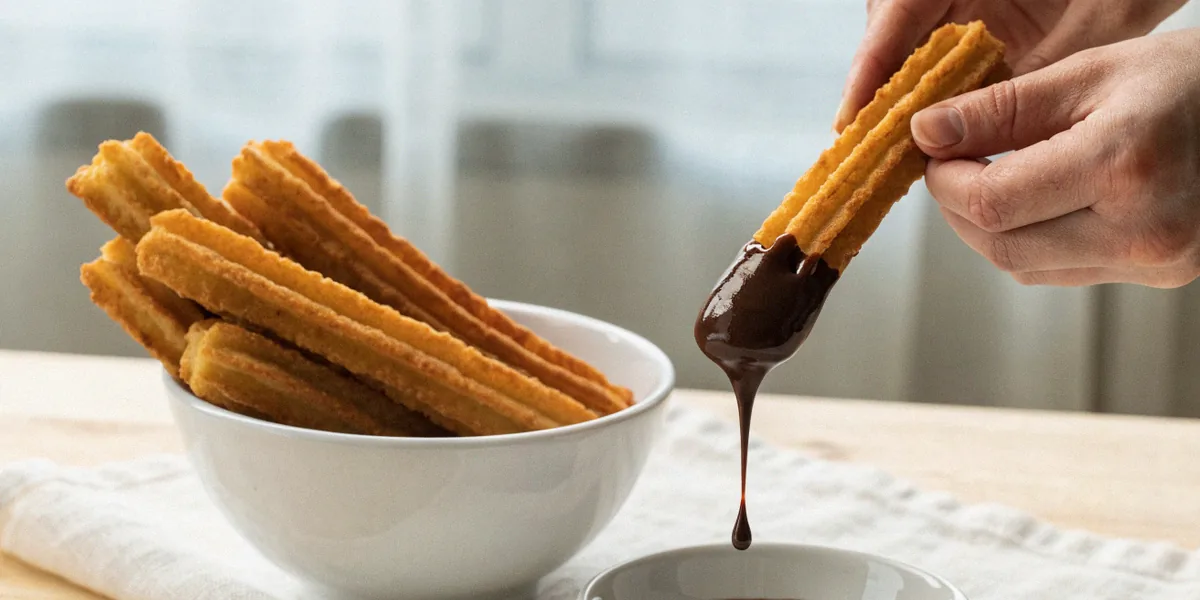
Homemade Churros with Chocolate Sauce: A Spanish Classic
Walk past any churrería in Spain first thing in the morning and you will smell it before you see it: hot oil, sweet dough, and the unmistakable scent of thick chocolate warming on the stove. That aroma pulls in everyone from early commuters to families finishing a night out. Here at The Foodie’s Larder, we think the good news is that you do not need a flight to Madrid to enjoy it. Churros are made from pantry basics — flour, water, a little butter, salt and sugar — and with a piping bag and a pan of hot oil, you can be dipping crisp, golden churros into rich Spanish chocolate within the hour. This guide walks you through every step, from the dough to the dipping sauce, with a few tips we have picked up along the way.
What Are Churros? A Taste of Spain
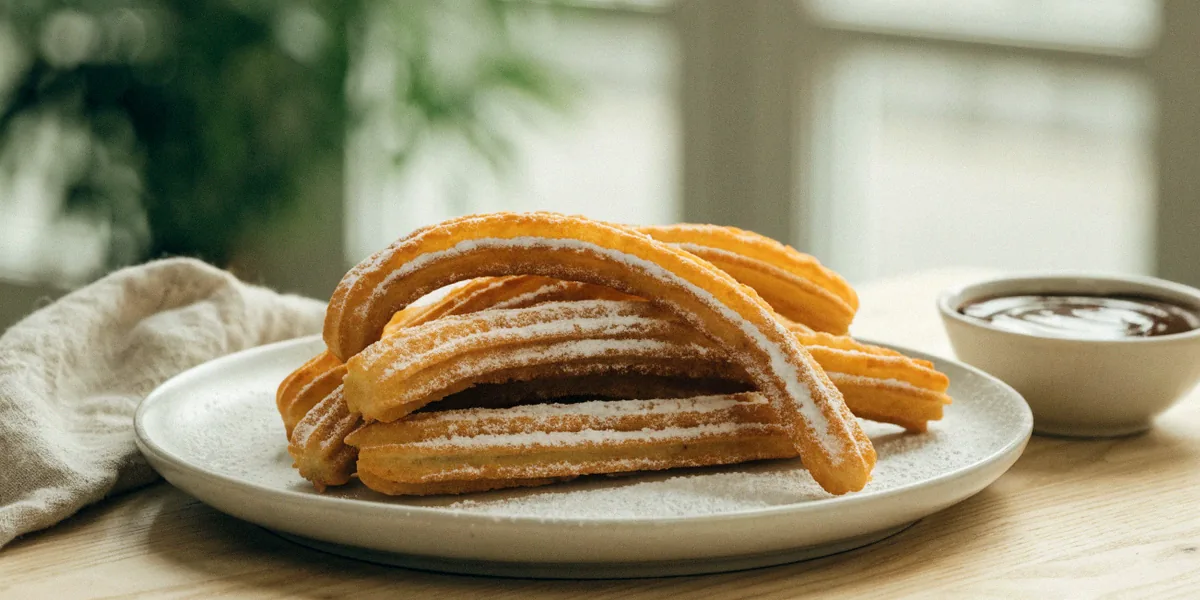
Churros are a traditional Spanish breakfast and snack, eaten at any hour of the day. In Spain they are most commonly enjoyed in the morning with a cup of thick hot chocolate for dunking, though you will also find them late at night after a fiesta. They are a fixture at local ferias and festivals across the country, and in Valencia they are practically essential during Las Fallas, when stalls across the city fry them fresh from dawn until well past midnight. Order them in a café and they will arrive hot, dusted with sugar, and served with a small cup of chocolate so thick it coats the back of a spoon.
The Origins of Churros
The exact origins of the churro are debated. One popular theory credits Portuguese bakers, who fried strips of a choux-like dough and called them porras. Another suggests Spanish shepherds made them as a practical alternative to bread, frying dough over an open fire because they had no oven to hand. What is certain is that the churro as we know it today became firmly established in Spain, and from there travelled to Latin America and beyond. The name is often linked to the horns of the churra sheep, which the fried dough supposedly resembles — a charming story, whether or not it is strictly true.
Churros vs. Porras: What’s the Difference?
They look similar, but they are not the same thing. Churros are thinner, with a ridged, star-shaped profile created by a star nozzle, and they are usually dusted in sugar. Porras are larger, thicker and often smoother in shape, with a softer, doughier centre. Porras are typically served plain or with a light sprinkle of sugar, and they are the ones you will most often see cut into pieces and shared at the table. Both are fried in hot oil and both are excellent with chocolate, so if you master one, you are well on your way to the other.
Essential Ingredients for Authentic Churros
The ingredient list is short, which is exactly why quality matters. For the dough you will need plain flour, water, a little butter, salt and sugar for coating. For the chocolate sauce, we recommend a proper Spanish drinking chocolate such as Valor, or a good dark chocolate with around 70% cocoa, melted with milk and finished with a pinch of cinnamon. Valor chocolate is a popular Spanish brand for hot chocolate, and it is widely available in the UK, so it is an easy upgrade if you want an authentic result.
Choosing the Right Flour
Plain flour is what you want here. It has enough protein to give the dough structure without turning tough, and it is the flour Spanish cooks reach for when making churros at home. Strong bread flour can make the dough chewy and hard to pipe, while self-raising flour will cause the churros to puff unevenly in the oil. Stick with plain, and weigh it rather than scooping straight from the bag for the most consistent dough.
The Best Chocolate for Spanish Hot Chocolate
Spanish drinking chocolate is thicker and less sweet than the hot chocolate we are used to in the UK. Valor is the classic choice, sold in bars that melt down into a glossy, spoonable sauce. If you cannot find it, a good dark chocolate with 70% cocoa works beautifully. Add a pinch of cinnamon to the pan, and if you want to push the flavour further, a small splash of sherry vinegar from Jerez adds depth and stops the chocolate tasting flat. It is a trick we use often, and nobody ever guesses why the sauce tastes so good.
Step-by-Step: How to Make Churros at Home
The method is closer to making choux pastry than to making bread. You heat the water with the butter and salt, beat in the flour to form a smooth paste, then pipe and fry. Once you have done it once, it becomes second nature.
Making the Dough
- Put 250ml water, 50g unsalted butter and a pinch of salt in a saucepan and bring to a rolling boil.
- Take the pan off the heat and tip in 150g plain flour all at once, beating hard with a wooden spoon until you have a thick, smooth paste.
- Return the pan to a low heat for a minute or two, stirring constantly, until the dough pulls away from the sides and forms a ball.
- Leave the dough to cool for 10 minutes, then beat in one egg until fully incorporated. The dough should be glossy and pipeable.
Piping and Frying Tips
Fit a piping bag with a large star nozzle — this is what gives churros their ridged edges and helps them crisp up. Heat your oil to 180°C; if you do not have a thermometer, drop in a small piece of dough and it should sizzle and rise steadily without browning instantly. Pipe lengths of dough directly into the oil, cutting them off with scissors or a knife, and fry in small batches so the temperature does not drop. Cook for two to three minutes on each side until deep golden. A churrera, the traditional Spanish press, does the same job if you have one.
Draining and Coating in Sugar
Lift the churros out with a slotted spoon and drain them on kitchen paper for a moment. While they are still hot, roll them in a bowl of caster sugar mixed with a little cinnamon. Serve straight away — churros wait for no one.
Perfect Chocolate Sauce for Dipping
For the sauce, gently melt 150g of dark chocolate or Spanish drinking chocolate with 200ml whole milk in a small pan. Whisk in a teaspoon of cornflour slaked in a little cold milk, and simmer for a minute or two until the sauce thickly coats the back of a spoon. Add a pinch of cinnamon and a small splash of sherry vinegar for depth. Serve warm in small cups so everyone can dip as they go.
Thick vs. Thin: Getting the Consistency Right
Spanish hot chocolate should be thick enough to hold a churro upright for a second or two. If yours is too thin, simmer it a little longer or add another pinch of cornflour. If it is too thick, loosen it with a splash of milk. Remember it will thicken further as it cools, so take it off the heat slightly looser than you want it on the table.
Flavour Twists: Orange, Chilli, or Cinnamon
Once you have the base sauce right, it is easy to play. A strip of orange zest steeped in the milk gives a lovely citrus note, a pinch of dried chilli flakes adds gentle warmth, and extra cinnamon turns it into something closer to a Mexican-style chocolate. All three work beautifully with the crisp, plain dough of the churros.
Serving and Storing Your Churros
Churros are at their best in the first few minutes after frying, when the outside is crisp and the inside is still soft and steamy. Serve them immediately, piled on a plate with the chocolate sauce alongside for dipping.
Traditional Serving Suggestions
In Spain, churros are almost always eaten with thick hot chocolate, but they also pair well with a strong coffee or a café con leche. For a weekend treat, we like to set out a bowl of cinnamon sugar, a cup of chocolate each, and let everyone help themselves.
How to Reheat Churros
Leftovers will lose their crunch, but they are easy to bring back. Reheat them in a hot oven at 200°C for four to five minutes, or in an air fryer at 180°C for three to four minutes. Avoid the microwave, which will leave them soggy. Reheated churros will never quite match fresh ones, but they are still very good with a fresh batch of chocolate sauce.
Our Favourite Spanish Ingredients and Where to Buy Them
Making churros is a great excuse to stock your kitchen with proper Spanish ingredients. Brindisa is a well-known UK supplier of Spanish foods, with shops in London and a strong online range, and Delicioso is another reliable name for pantry staples. Both stock the chocolate, olive oil and vinegars you need for this recipe and many others.
Trusted UK Suppliers
- Brindisa — a long-established Spanish food importer with shops and nationwide delivery.
- Delicioso — a solid online option for Spanish chocolate, olive oil and tinned goods.
- Local delis and markets — many larger towns now have a Spanish or Mediterranean shop worth exploring.
Building a Spanish Pantry
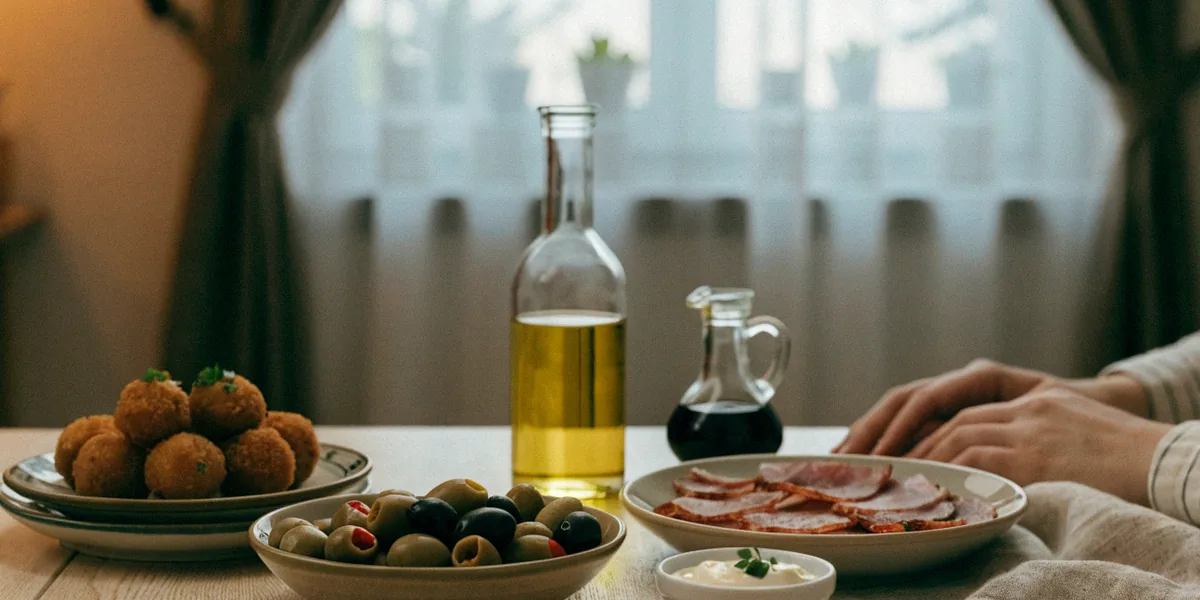
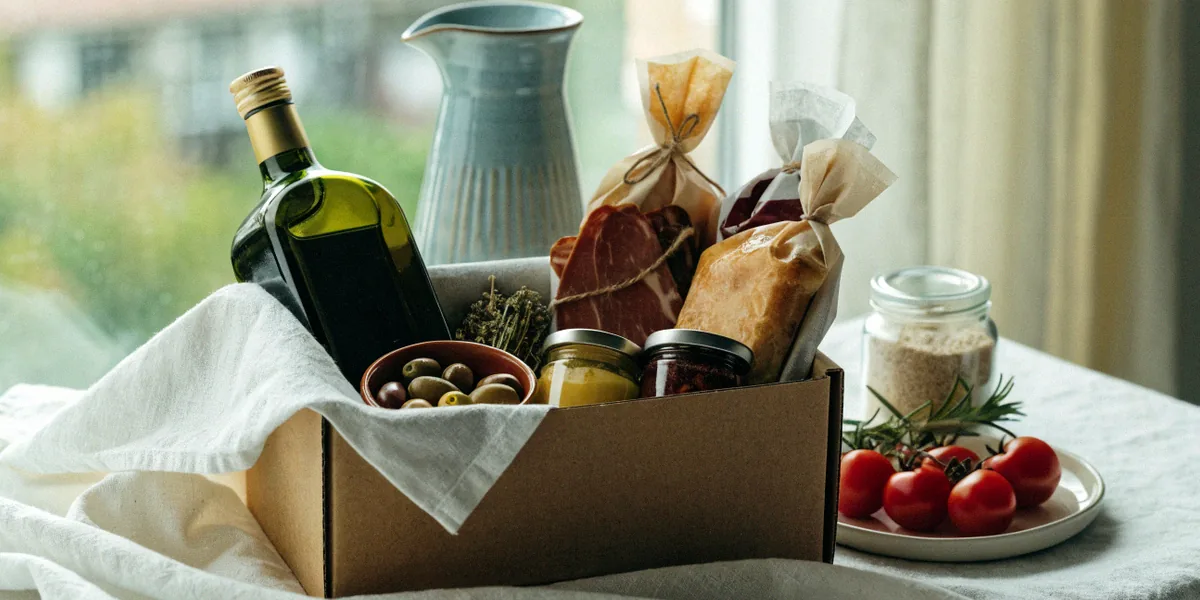
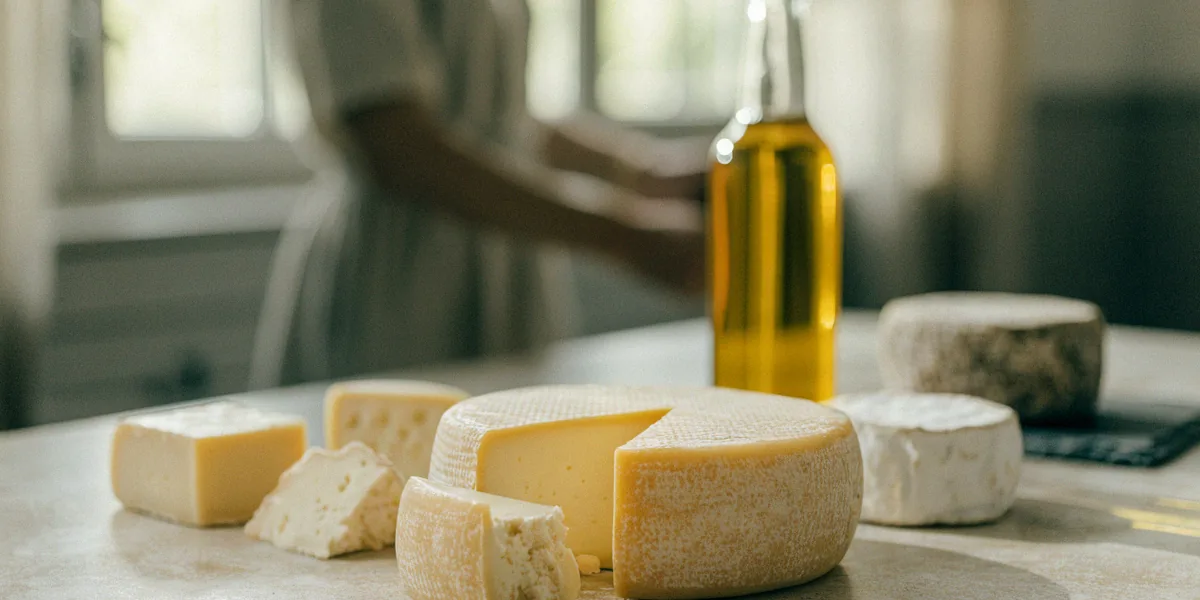
Beyond churros, a few key ingredients will let you cook Spanish food at home all year round. Manchego cheese is a famous Spanish cheese made from sheep’s milk, excellent on a tapas board with membrillo and crackers. A good bottle of sherry vinegar from Jerez is essential for dressings, gazpacho and, as we mentioned, chocolate sauce. Add a tin of good olive oil, some pimentón and a jar of anchovies, and you have the foundations of countless tapas recipes. If you are buying for someone else, food hampers from Spanish delicatessens make great gifts — a thoughtful way to share a taste of Spain without anyone needing to cook.
Frequently Asked Questions
Can I make churros without a piping bag?
Yes. A sturdy zip-lock bag with the corner snipped off will work, though you will not get the classic ridges. A churrera, the traditional Spanish press, is the best tool if you plan to make churros often.
Why did my churros turn out greasy?
Almost always because the oil was not hot enough. If the temperature drops below about 170°C, the dough absorbs oil instead of sealing on contact. Fry in small batches and let the oil come back up to 180°C between rounds.
What is the best chocolate for dipping churros?
Valor chocolate is the classic Spanish choice and is widely available in the UK. A good dark chocolate with around 70% cocoa is an excellent alternative, especially with a pinch of cinnamon and a splash of sherry vinegar.
Can I prepare the churro dough in advance?
You can make the dough up to a few hours ahead and keep it covered in the fridge. Bring it back to room temperature before piping, as cold dough is stiff and harder to work with.
Are churros suitable for vegetarians?
Yes, this recipe is vegetarian. The dough is made from flour, water, butter and egg, and the chocolate sauce uses milk and dark chocolate. Check your chocolate label if you need to avoid any additional ingredients.
Making churros at home is one of those small kitchen victories that pays off immediately. The ingredients are humble, the method is straightforward, and the reward is a plate of crisp, sugar-dusted churros with a cup of thick Spanish chocolate — no flight required. Give it a try this weekend, and with a little practice you will be turning out results that would not look out of place in a churrería in Valencia. Once you have mastered the technique, explore the rest of our Spanish recipes and let us know how you get on.

Post Comment