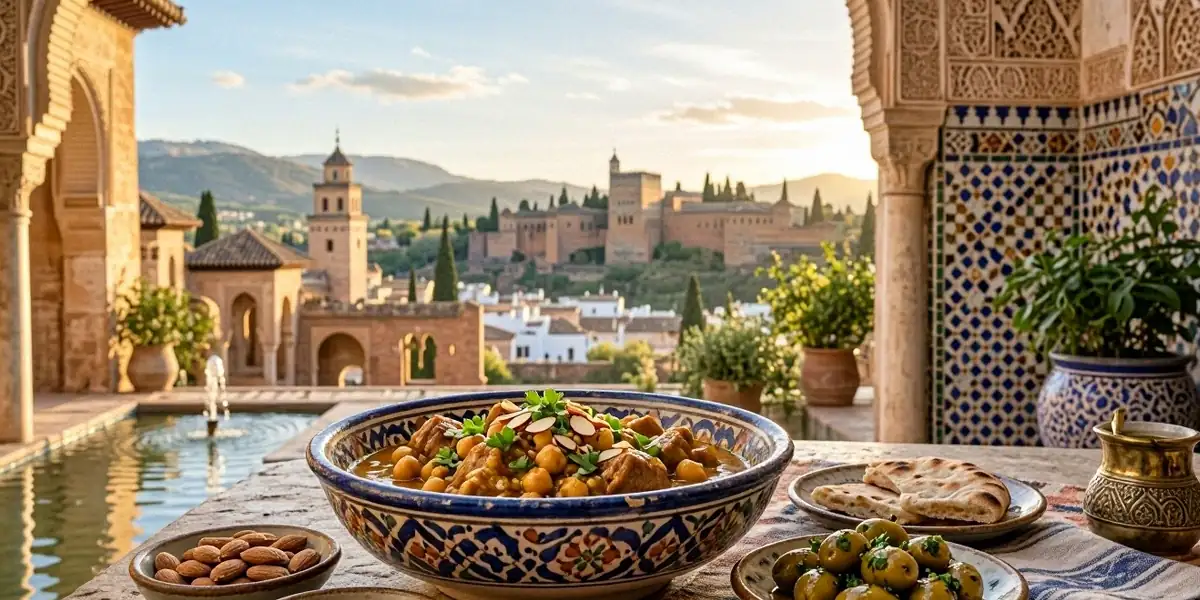
The Moorish Influence on Andalusian Cuisine
Walk into any food market in Andalusia and the senses are overwhelmed before you have even reached the first stall. The air carries the sweet smoke of roasting chestnuts in winter and the sharp bite of chilled gazpacho in summer. Trays of glistening olives sit beside pyramids of oranges, while legs of cured ham hang overhead like dark, fragrant curtains. Behind the counters, vendors pile up pyramids of almonds, cumin-dusted chickpeas and slabs of pale Manchego. It is a scene that feels unmistakably Spanish — yet so much of what makes Andalusian cooking so distinctive arrived from across the sea. Why does the food of southern Spain taste so different from the rest of the country? The answer lies in nearly eight centuries of Moorish rule, a period that reshaped the region’s kitchens, markets and eating habits in ways we can still taste today.
A Brief History of the Moors in Andalusia
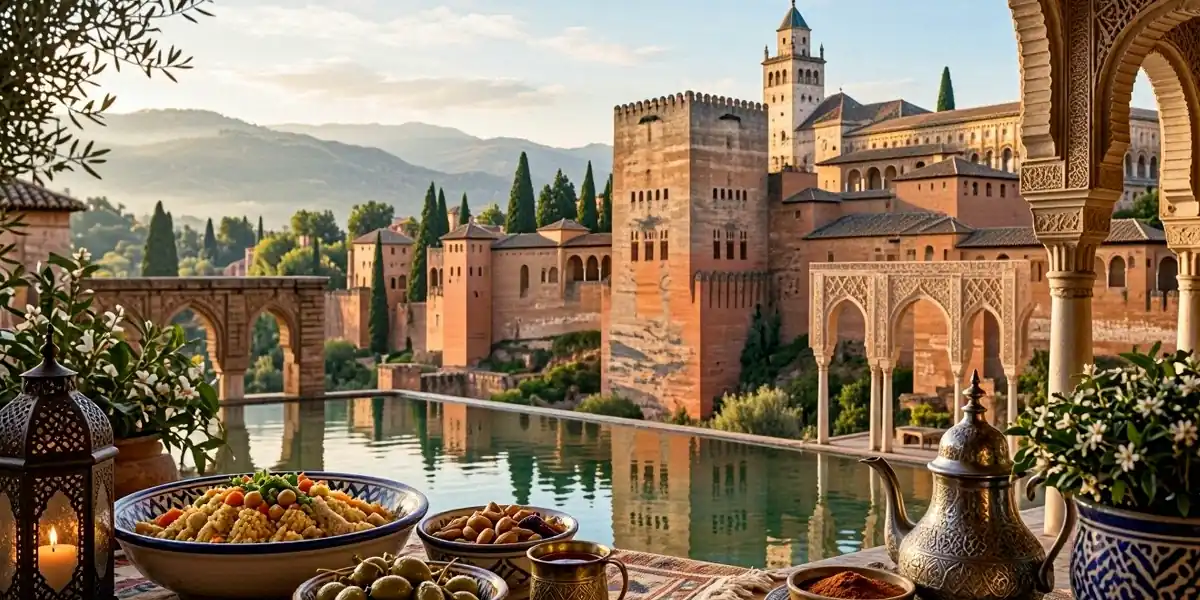
To understand Andalusian food, we first need to understand the people who shaped it. The Moors were Muslims of North African and Arab descent who crossed the Strait of Gibraltar in 711 and established a presence on the Iberian Peninsula that would last until 1492. Their territory, known as Al-Andalus, became one of the most sophisticated and cosmopolitan societies in medieval Europe.
The Arrival and Rule of the Moors
The Moorish arrival in 711 was swift. Within a few years, most of the peninsula was under Muslim control, and a new civilisation began to take root. Al-Andalus was governed in various forms over the centuries — as an emirate, a caliphate and eventually a collection of taifas, or small kingdoms — but throughout this period, agriculture, trade and scholarship flourished. The Moors introduced new irrigation systems, such as the acequias that still channel water through the hills of Granada today, and transformed arid land into productive market gardens.
Key Cities and Cultural Exchange
Córdoba, Seville and Granada became the great centres of Al-Andalus. Córdoba, at its height in the tenth century, was one of the largest and most cultured cities in Europe, with libraries, bathhouses and paved streets. Seville served as a major trading hub, while Granada — the last stronghold of Moorish Spain — gave us the Alhambra and a culinary tradition that remains remarkably intact. In these cities, Muslim, Jewish and Christian communities lived alongside one another for long stretches, and their cuisines blended. The result was a cooking style that drew on Arab, Berber, Andalusian and Mediterranean influences all at once.
The Legacy After 1492
When Granada fell in 1492, Moorish political power in Spain came to an end. Yet the culinary legacy proved impossible to erase. Many Muslim and Morisco families remained for generations, and their ingredients, techniques and dishes were absorbed into the wider Spanish kitchen. Even as pork and wine became markers of Christian identity, the everyday food of the south — its soups, stews, sweets and spice blends — carried the fingerprints of Al-Andalus.
Key Ingredients Introduced by the Moors
The Moors did not simply bring recipes; they brought an entire agricultural system. They introduced or popularised a remarkable range of ingredients that transformed local cooking and remain central to Spanish recipes today.
- Rice — cultivated extensively along the eastern and southern coasts, laying the groundwork for paella.
- Citrus fruits — oranges, lemons and bitter Seville oranges, now inseparable from Spanish identity.
- Aubergines — used in stews, pickles and fried dishes across the region.
- Spinach — cooked with chickpeas and garlic in classic Andalusian preparations.
- Almonds — the backbone of many Spanish sweets and sauces, including ajoblanco.
- Spices — cumin, saffron and cinnamon, which gave Andalusian food its warm, aromatic character.
Rice and the Birth of Paella
Rice was already known in parts of Spain, but the Moors developed its cultivation on a large scale, particularly around Valencia and the southern coast. The combination of rice fields, irrigation and a culture that prized one-pot cooking set the stage for paella. The dish as we know it came later, but its DNA — rice simmered with aromatics, saffron and whatever the land provided — is firmly Moorish in spirit.
Citrus Fruits and Their Impact
Before the Moors, citrus was scarce on the peninsula. They planted orange and lemon groves that eventually gave Spain its famous bitter Seville oranges — the essential ingredient in proper British marmalade. Citrus brought brightness to Spanish cooking and became a defining note in everything from marinades to desserts.
Spices and Aromatics
Cumin, saffron and cinnamon arrived in force with the Moors and reshaped the flavour of Iberian food. Saffron, grown in La Mancha, became a signature of Spanish cooking. Cumin lent its earthy warmth to stews and chickpea dishes, while cinnamon found its way into both savoury preparations and the sweet pastries of Andalusia. These spices are the reason a bowl of Andalusian stew tastes so different from a northern European one.
Moorish Techniques and Dishes That Define Andalusia
Ingredients tell only half the story. The Moors also brought cooking methods that remain at the heart of Andalusian cuisine — and in some cases, they invented dishes we now think of as quintessentially Spanish.
The Art of Slow Cooking
Moorish kitchens favoured long, gentle cooking in clay pots, which retained heat evenly and allowed flavours to deepen. This tradition survives in dishes like olla de garbanzos and the many slow-simmered stews found across the region. Clay cooking, known as barro, is still prized by Spanish home cooks.
Gazpacho and Ajoblanco
Cold soups are a Moorish gift to Andalusia. Gazpacho, made from tomatoes, peppers, cucumber and bread, is the most famous — though the tomato only arrived after the Columbian exchange. Ajoblanco, a chilled soup of almonds, garlic, bread and olive oil, is even older and more directly Moorish in origin. Both are refreshing antidotes to the Andalusian summer heat.
Tapas and Small Plates
Tapas culture is believed to have originated in Andalusia, partly influenced by Moorish eating customs. The Moorish habit of serving small dishes with drinks, and of eating in a series of modest courses rather than one large meal, helped shape the tapas tradition. Today, tapas at home is one of the easiest ways to bring these flavours to a British kitchen.
The Moorish Roots of Spanish Charcuterie and Cheese
Here the story becomes more nuanced. Moorish dietary laws avoided pork, yet the tradition of curing and preserving meat was already well established in the region — and the Moors themselves preserved meats and fish through salting and drying. When Christian rule returned, pork returned to the table, but the curing techniques endured.
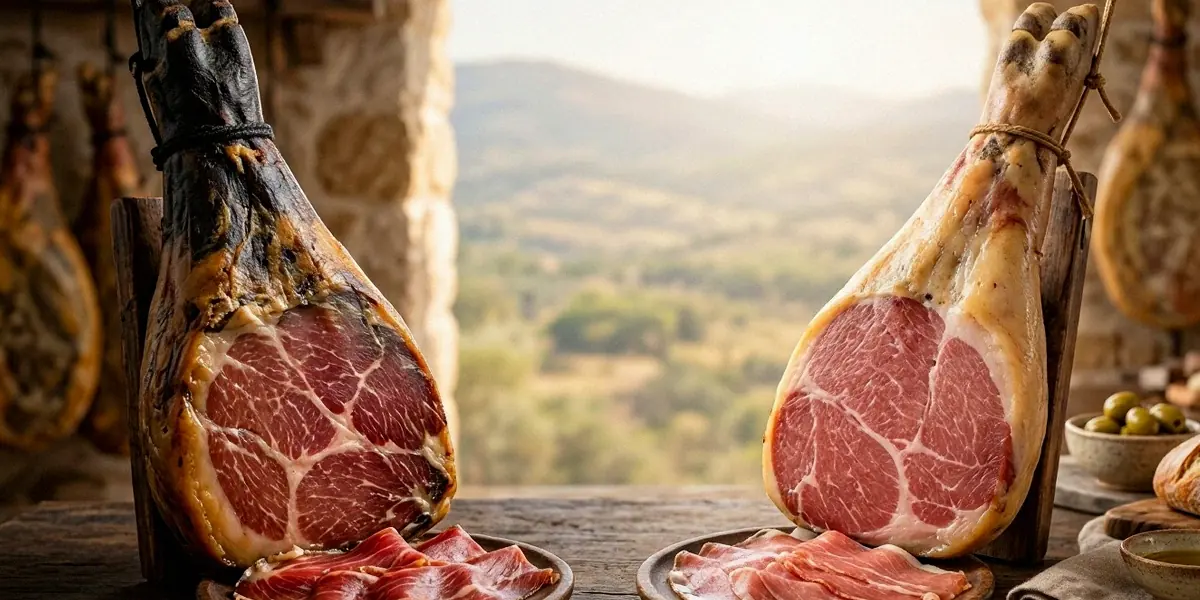
Jamón Ibérico: A Legacy of Curing
Jamón ibérico is a protected designation of origin product, produced from Iberian pigs and cured over many months. The skills of salting and air-drying meat were part of the Andalusian landscape long before the Moors arrived, but the Moorish mastery of preservation reinforced them. Today, brands like Joselito and Cinco Jotas are available in the UK through specialist suppliers.
Manchego and Beyond
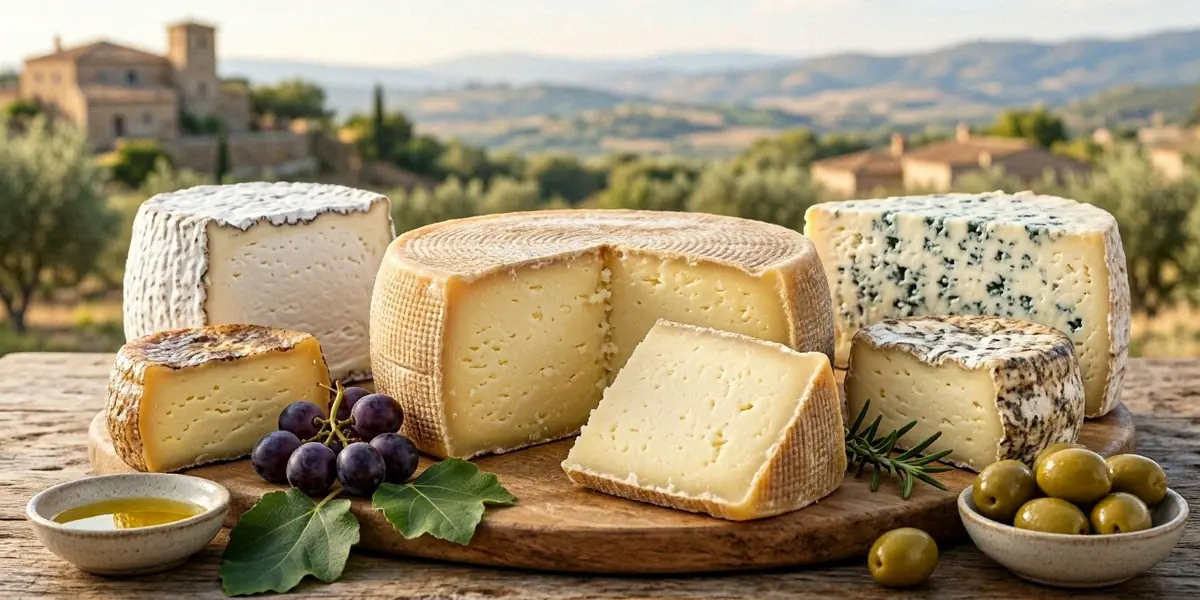
Manchego cheese is made from sheep’s milk in the La Mancha region and is popular in UK supermarkets. Its long history reflects the region’s pastoral traditions, and it pairs beautifully with the Moorish-influenced flavours of the south — almonds, quince paste and olives.
The Moorish Influence on Preservation
Salting, drying and preserving in oil were Moorish specialities. Pickled vegetables, salted fish and oil-preserved foods remain staples of the Andalusian pantry. These methods allowed food to survive the long, hot summers and laid the foundation for the Spanish charcuterie we enjoy today.
Bringing Moorish-Andalusian Flavours to Your UK Kitchen
You do not need to travel to Spain to cook this way. With a few good ingredients and some simple techniques, we can bring these flavours into a British kitchen.
Stocking Your Pantry with Spanish Ingredients
UK-based suppliers like Brindisa and The Tapas Lunch Company specialise in Spanish foods. Stock up on:
- Good olive oil and sherry vinegar
- Saffron, cumin and smoked paprika
- Marcona almonds and tinned chickpeas
- Jamón ibérico and Manchego cheese
- Piquillo peppers and Spanish olives
Simple Recipes to Try at Home
Start with a classic gazpacho, blend a batch of ajoblanco, or make albóndigas — Moorish-style meatballs simmered in a saffron and almond sauce. These dishes are forgiving, affordable and perfect for UK home cooks.
Hosting a Tapas Night
Tapas at home is about variety and sharing. Set out a selection of small plates — olives, cheese, cured ham, tortilla, patatas bravas — and let guests help themselves. It is relaxed, sociable and deeply Andalusian.
The Lasting Taste of Al-Andalus
The Moorish influence on Andalusian cuisine is not a historical footnote — it is a living, delicious part of every meal. From the saffron in your stew to the almonds in your dessert, from the tapas on your table to the cured ham on your board, the flavours of Al-Andalus endure. We encourage you to explore Spanish recipes and bring a little of this rich culinary heritage into your own kitchen.
Frequently Asked Questions
What ingredients did the Moors bring to Spain?
The Moors introduced rice, citrus fruits, aubergines, spinach, almonds and spices such as cumin, saffron and cinnamon. These ingredients transformed Andalusian cooking and remain central to Spanish recipes today.
Is jamón ibérico available in the UK?
Yes. Jamón ibérico is a protected designation of origin product, and brands like Joselito and Cinco Jotas are available through UK-based suppliers such as Brindisa and The Tapas Lunch Company.
Where can I buy Manchego cheese in the UK?
Manchego cheese, made from sheep’s milk in the La Mancha region, is popular in UK supermarkets and is also stocked by specialist Spanish food suppliers like Brindisa.
Did the Moors invent tapas?
Tapas culture is believed to have originated in Andalusia, partly influenced by Moorish eating customs. The Moorish habit of serving small dishes with drinks helped shape the tapas tradition we know today.
Can I make Moorish-Andalusian dishes at home in the UK?
Absolutely. With ingredients from UK suppliers like Brindisa and The Tapas Lunch Company, you can recreate dishes such as gazpacho, ajoblanco and albóndigas in your own kitchen.


Post Comment