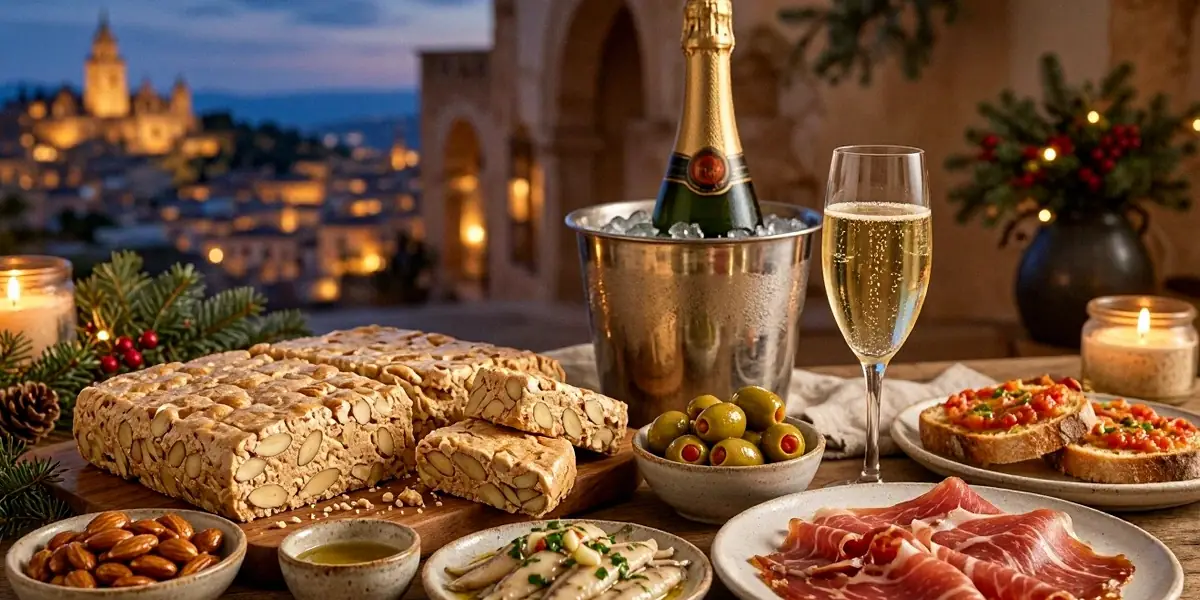
A Spanish-Style Christmas Feast: Turrón, Cava and Festive Tapas
The first Christmas we spent in Spain, we sat down to dinner at ten at night and didn’t stand up again until nearly two. There was no single roast bird carried in to applause — instead, plate after plate arrived: blistered Padrón peppers, garlicky prawns swimming in olive oil, thin slices of acorn-fed ham draped over warm bread. The table was loud, crowded, and nobody was in a hurry. Back home in the UK, our Christmas table has always been a more disciplined affair: turkey at three, crackers, the Queen’s speech, everything cleared by six. There’s nothing wrong with that tradition, but one year we decided to borrow a little of the Spanish spirit — and it completely changed how we celebrate. If you fancy shaking up your festive menu this December, here’s how to build a Spanish Christmas feast that works beautifully in a British kitchen.
Why a Spanish Christmas Feast Belongs on Your UK Table
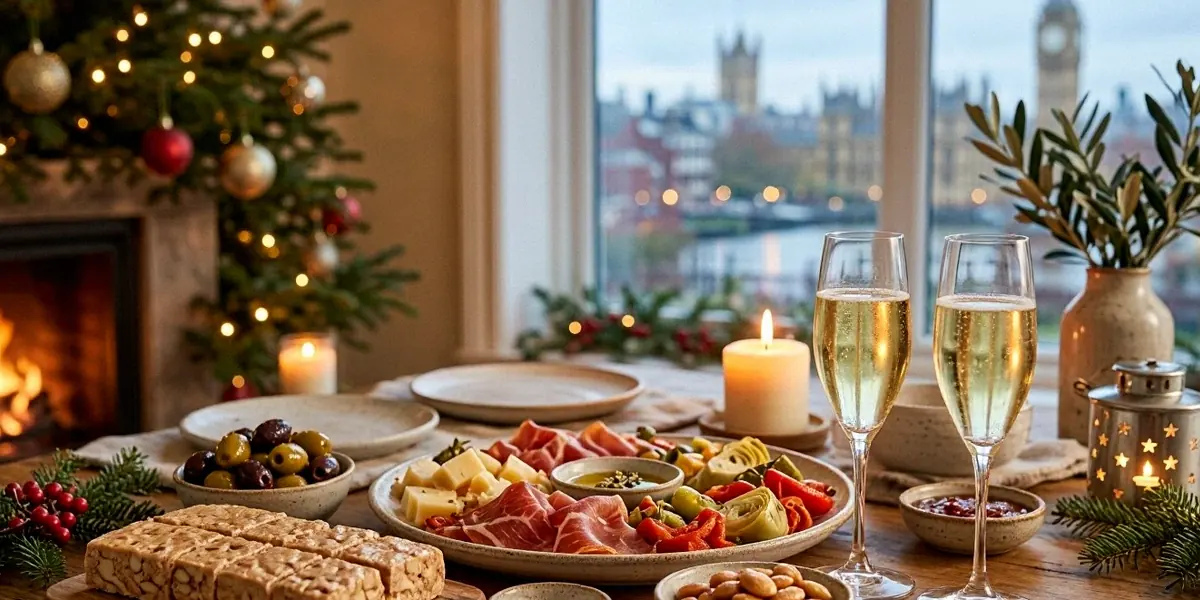
Spanish Christmas eating isn’t about one enormous meal. It’s about grazing — a long, unhurried procession of small plates, late-night dinners that stretch past midnight, and dishes designed to be shared rather than plated individually. The centrepiece isn’t a roast; it’s the table itself, and the people crowded around it.
The good news for us in the UK is that sourcing the key ingredients has never been easier. Supermarkets now stock jamón ibérico, Spanish cheese, and quality olive oils as standard, and online delis deliver nationwide. You no longer need a trip to Madrid to eat like a Madrileño at Christmas.
The Spanish Way: Sobremesa and Late-Night Feasting
The word sobremesa has no real English equivalent. It means the time spent lingering at the table after the meal is finished — talking, laughing, nibbling on whatever’s left, pouring one more glass. In Spain, Christmas Eve dinner (Nochebuena) often begins at 9 or 10pm and rolls into the small hours, with turrón and cava appearing long after the savoury food has gone. The meal isn’t a sprint to the pudding; it’s an evening with no fixed end point.
How to Adapt Spanish Traditions to a British Christmas
You don’t have to abandon your Christmas Day roast to enjoy this. Our approach is to go Spanish on Christmas Eve — a tapas spread, a jamón and cheese board, cava, and sweets — then keep the traditional turkey for the 25th. Alternatively, serve tapas as a long starter before the main event, or skip the roast entirely and make the board the centrepiece. If you’re feeding a crowd, this style of eating is genuinely less stressful: almost everything can be prepped in advance and laid out cold or reheated in minutes.
Festive Tapas to Start: Our Favourite Spanish Recipes
These are the tapas we return to every December. They’re forgiving, use ingredients you can find in any UK supermarket or deli, and most can be made a day ahead. Serve three or four per person alongside bread and good olive oil.
Warm Tapas: Gambas al Ajillo and Chorizo al Vino
Gambas al ajillo — prawns sizzled in olive oil with sliced garlic and a dried chilli — is the dish that gets the most oohs at our table. Use raw peeled king prawns, plenty of garlic, and a good glug of extra virgin olive oil. Serve with crusty bread to mop up the oil, because that’s the best part.
Chorizo al vino is even simpler: thick coins of cured chorizo simmered in red wine until the liquid reduces to a sticky glaze. The paprika in the chorizo colours the wine a deep red, and the whole thing takes ten minutes. A tortilla española — the thick Spanish omelette of potato and onion — can be made the day before and served at room temperature in wedges.
Cold Tapas: Manchego, Olives and Jamón Ibérico
Not everything needs cooking. A plate of sliced Manchego, a bowl of good Spanish olives (the fat, briney Gordal ones are our favourite), and a few folds of jamón ibérico is a tapas course in itself. Add picos — small Spanish breadsticks — and a dish of marcona almonds, and you’ve got the easiest festive starter imaginable.
The Centrepiece: Jamón Ibérico and Spanish Cheese Board
If you build one show-stopping element this Christmas, make it the board. A proper Spanish board — jamón ibérico, three or four cheeses, quince paste, olives, nuts, and bread — looks spectacular and requires almost no cooking.
For jamón ibérico, look for acorn-fed (de bellota) ham from renowned producers such as Cinco Jotas or Joselito, both widely available in the UK. The flavour is nutty, deeply savoury, and nothing like the mass-produced cooked ham we grew up with. For cheese, the essentials are Manchego (firm, sheep’s milk, slightly nutty), Idiazábal (smoky and buttery), and Cabrales (a punchy blue wrapped in foil). All three pair beautifully with cava and jamón.
Choosing the Best Jamón Ibérico for Christmas
You’ll see three grades on the label: jamón serrano (the everyday ham), jamón ibérico (from the Iberian pig), and jamón ibérico de bellota (acorn-fed, the top tier). For a Christmas treat, go for bellota if the budget allows. Hand-carved slices are worth seeking out — pre-packed versions are fine, but the texture of freshly cut ham is on another level. Brindisa in Borough Market, London, is one of the best sources in the UK for both jamón ibérico and Spanish cheese, and they ship nationwide.
Pairing Spanish Cheeses with Accompaniments
Keep it simple and let the cheeses speak:
- Manchego — drizzle with honey or serve with fig jam and marcona almonds.
- Idiazábal — pair with membrillo (quince paste) and a few slices of jamón.
- Cabrales — serve with crusty bread and a glass of cava to cut through the richness.
- Extras — Gordal olives, picos, roasted peppers, and a small dish of good olive oil for dipping.
Turrón and Other Spanish Christmas Sweets
Spanish Christmas sweets are seriously underrated in the UK. They’re sweet, nutty, and designed to be nibbled slowly with a glass of something sparkling — the perfect end to a long, grazing meal.
Turrón: The Essential Spanish Christmas Treat
Turrón is the undisputed king of Spanish Christmas confectionery, sold in bars and blocks everywhere from December onwards. There are two main types:
- Turrón de Jijona — soft, chewy, made from ground almonds and honey. Mild and almost marzipan-like.
- Turrón de Alicante — hard and crunchy, packed with whole almonds in a caramelised honey matrix.
Both are excellent with cava or a small glass of sweet sherry. In the UK, Waitrose and Ocado stock turrón and polvorones during the Christmas season, and online Spanish delis carry a wider range.
Polvorones and Marzipan: Sweet Endings
Polvorones are crumbly, powdery shortbread-like biscuits flavoured with cinnamon and almond — they literally dissolve the moment you bite into them. Mazapán, Spanish marzipan, is often shaped into little figures and baked until lightly golden. Together with turrón, they make a festive sweet platter that feels far more interesting than a tin of Quality Street.
Cava: The Sparkling Star of Your Spanish Christmas
Cava is Spain’s answer to champagne, produced mainly in Catalonia using the same traditional method — and it’s typically a fraction of the price. For a festive table, it’s our go-to fizz.
Cava vs Champagne: What to Know
Both are made with the méthode traditionnelle, but cava uses native Spanish grapes like Macabeo, Xarel·lo, and Parellada, giving it a slightly earthier, more citrus-driven character. It’s usually drier and crisper than champagne, which makes it a brilliant match for salty tapas and jamón. Freixenet and Codorníu are the two most popular cava brands widely available in UK supermarkets — both make excellent entry-level bottles and more premium reserva versions worth splashing out on.
Serving Cava with Festive Tapas and Turrón
Serve cava well chilled — around 6–8°C — in a white wine glass rather than a flute, which lets the aromas open up. Pour it with the aperitivo, keep it flowing through the tapas, and bring out a second bottle with the turrón at the end. The dryness of a brut cava balances the sweetness of Jijona turrón beautifully.
Putting It All Together: Your Spanish Christmas Menu Plan
Here’s how we’d run the evening. It’s designed to be relaxed, with most of the work done before your guests arrive.
A Sample Spanish Christmas Menu
- Aperitivo (arrival): Cava, marcona almonds, Gordal olives, picos.
- Cold tapas: Jamón ibérico, Manchego, Idiazábal, Cabrales, membrillo.
- Warm tapas: Gambas al ajillo, chorizo al vino, tortilla española wedges.
- Main (optional): A slow-roasted pork shoulder or a whole baked fish if you want a centrepiece beyond the board.
- Dessert: Turrón (Jijona and Alicante), polvorones, marzipan figures, fresh figs.
- Sobremesa: More cava, more conversation, no rush.
Make-Ahead Tips for a Stress-Free Feast
Make the tortilla the day before — it’s better at room temperature. Slice the chorizo and marinate it in wine in the fridge overnight. Peel the prawns and chop the garlic in the morning. Lay the board just before guests arrive, and cook the warm tapas in batches while everyone’s nibbling. That’s it — no last-minute panic, no sweating over a turkey timer.
FAQ
Where can I buy jamón ibérico in the UK?
Brindisa in Borough Market, London, is one of the best sources and ships nationwide. Larger Waitrose and Selfridges food halls also stock Cinco Jotas and Joselito, and online Spanish delis offer hand-carved slices by post.
Is cava a good substitute for champagne at Christmas?
Absolutely. Cava is made using the same traditional method and often costs half the price. Freixenet and Codorníu are both widely available in UK supermarkets and pair especially well with salty tapas and jamón.
What’s the difference between turrón de Jijona and turrón de Alicante?
Jijona is soft and chewy, made from ground almonds and honey. Alicante is hard and crunchy, with whole almonds set in caramelised honey. Both are traditionally eaten at Christmas with cava or sweet sherry.
Can I make Spanish tapas ahead of time?
Yes — tortilla española is best made the day before, chorizo al vino can be prepped and reheated, and the cheese and jamón board can be assembled just before serving. Only gambas al ajillo really needs cooking to order, and it takes five minutes.
Which Spanish cheeses go best with cava?
Manchego, Idiazábal, and Cabrales all work beautifully. Manchego’s nuttiness and Idiazábal’s smokiness complement cava’s acidity, while Cabrales’ blue bite is cut perfectly by a chilled glass of brut.
There’s something genuinely liberating about swapping the rigid timetable of a British Christmas for the Spanish rhythm of grazing, lingering, and sharing. Nothing needs to be perfect — the board can be rustic, the tapas can be messy, and the cava can flow a little too freely. And with jamón ibérico, Spanish cheese, turrón, and cava now stocked everywhere from Waitrose to Brindisa, Spanish food in the UK is more accessible than it’s ever been. Give it a go this December, and tag us in your festive creations — we’d love to see your table.

Post Comment
You must be logged in to post a comment.