Cooking with Saffron: How to Use Spain’s Red Gold Properly
Step into any traditional kitchen in Valencia or La Mancha at midday and you will notice it before you see it: a faint, honeyed, almost floral aroma rising from a pan of simmering rice. That scent is saffron, the dried stigmas of the Crocus sativus flower, and it is the ingredient that separates an ordinary Spanish dish from an unforgettable one. We have cooked with saffron for years in our own kitchens, and we still meet home cooks who are unsure whether they are using it correctly. Are you blooming it before it hits the pan? Are you buying the real thing? If you are not quite sure, this guide is for you.
What Makes Spanish Saffron So Special?
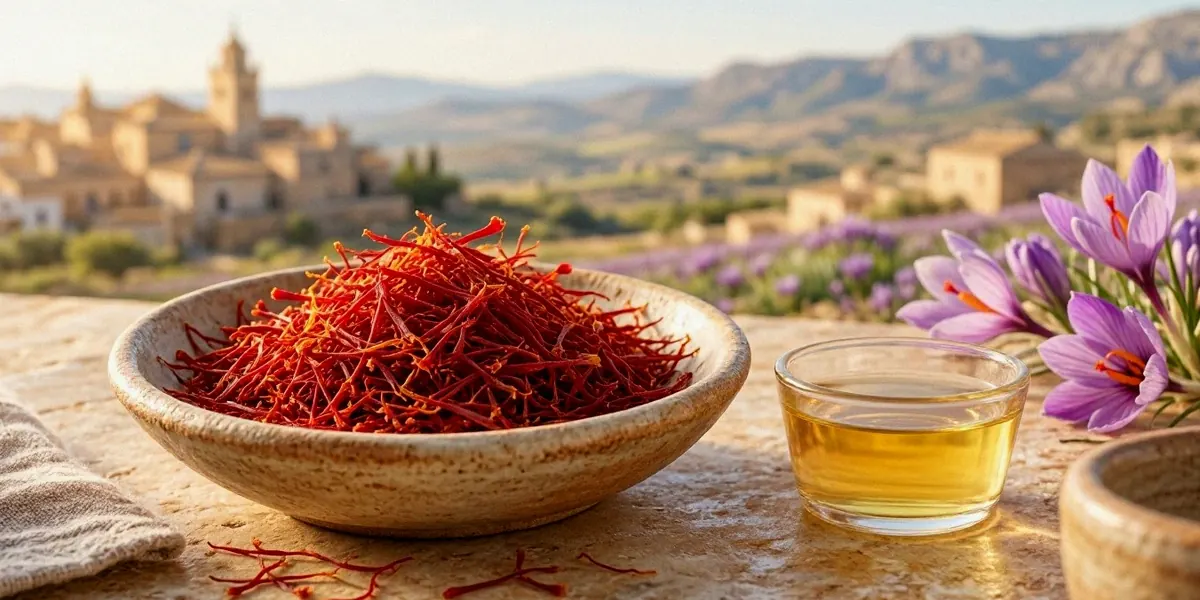
Saffron has been cultivated on the plains of Castilla-La Mancha for centuries, and it remains one of the most labour-intensive agricultural products on earth. Every thread is hand-picked at dawn during the brief October harvest, then toasted and dried with enormous care. Nothing about the process is quick, and that is precisely why the spice commands the price it does.
The numbers are staggering. It takes approximately 150,000 crocus flowers to produce 1 kilogram of saffron, and each flower yields only three stigmas. When you hold a small jar of quality threads in your hand, you are holding the product of an entire field and a great many hours of skilled manual work.
The La Mancha PDO and Its Global Reputation
La Mancha saffron holds a Protected Designation of Origin (PDO) status, a legal guarantee that the spice was grown, harvested, and processed within the designated region to strict standards. In practice, this means consistent colouring strength, a clean aroma, and traceability from field to jar. Chefs across Europe specifically request La Mancha saffron for rice dishes because its flavour is rounded rather than sharp, with a subtle bitterness that balances beautifully against sweet peppers and seafood.
Why Spanish Saffron Costs More Than Gold
By weight, good saffron often trades at or above the price of gold, and it is not marketing hype. The harvest window is roughly ten days per year, the flowers must be picked before sunrise while the stigmas are still closed, and the separation of stigma from petal is done entirely by hand. Add in the fact that you need 150,000 flowers for a single kilogram, and the economics become obvious. The good news for home cooks is that a gram stretches a very long way.
How to Buy Authentic Spanish Saffron in the UK
We have tested a lot of saffron over the years, and the difference between genuine Spanish threads and the cheap imitations sold in some supermarkets is night and day. Fake or adulterated saffron is a genuine problem in the UK market, so it pays to buy from sellers who can tell you exactly where their stock comes from.
Threads vs Powder: What to Look For
Our strong preference is always for whole threads rather than powder. Powdered saffron is easy to adulterate with turmeric, safflower, or dyed filler, and it loses its aroma far more quickly. Genuine threads should be deep crimson-red with slightly lighter orange tips, dry and brittle to the touch, and free of yellow stamens (those are the cheap filler and carry almost no flavour).
- Colour: Deep red threads with orange tips, never uniformly yellow.
- Aroma: Sweet, hay-like, slightly floral — never dusty or musty.
- Behaviour in water: Real saffron releases colour slowly over 15–20 minutes; fakes bleed instantly.
- Packaging: Sealed, opaque, and ideally labelled with a PDO mark.
Trusted UK Stockists and Brands
Brindisa and Sous Chef are reputable UK stockists for Spanish saffron, and both ship reliably across the country. Brindisa’s Spanish delis in London are a joy to browse in person, while Sous Chef offers excellent mail-order options with detailed provenance notes. Local independent delis and farmers’ markets often carry small-batch saffron too — just ask the seller where it was grown and when it was packaged. We would avoid the very cheapest supermarket jars: a low price usually signals old stock, powder, or safflower rather than true Crocus sativus.
Storing Saffron to Preserve Its Magic
Saffron is fragile. Light, heat, and moisture will strip its colour and aroma faster than most people realise, and a badly stored jar can lose its punch within a few months. Treat it like the precious ingredient it is and it will reward you for a long time.
The Best Containers and Locations
Transfer your saffron to a small airtight container — glass with a tight-fitting lid works beautifully — and keep it in a cool, dark cupboard away from the hob, the kettle, and the windowsill. Do not store it in the fridge, where condensation will ruin it. If you keep it in a spice rack above the cooker, move it today.
How Long Does Saffron Really Last?
Stored properly, saffron threads will hold their colour and flavour for up to two years. After that, they will not harm you, but they will disappoint you. If you are unsure whether yours is still good, steep a pinch in warm water — if the liquid turns a rich golden-orange within twenty minutes, you are fine. If it barely colours, it is time to restock.
How to Bloom Saffron Before Cooking
This is the single most important technique in this article. Dropping dry threads straight into a pan wastes most of what you paid for. Blooming saffron in warm liquid for 15-20 minutes releases its full colour and flavour, and it is essential for paella and other Spanish recipes. The process is simple but worth doing properly.
Crushing vs Whole Threads
Lightly crushing the threads between your fingers or with the back of a spoon increases the surface area and speeds up the release of colour. We usually crush about half the threads and leave the rest whole for visual appeal, especially in rice dishes where you want to see those red flecks against the golden grains.
Choosing the Right Liquid: Water, Stock, or Wine
Warm water is the neutral choice and works for almost everything. For deeper savoury notes, use a ladle of your hot stock. A splash of dry white wine or sherry adds acidity and complexity, and it works particularly well in fish stews. The key rule is temperature: warm, not boiling. Boiling water can scorch the delicate compounds and leave you with a flatter, slightly bitter result.
- Crush your pinch of threads gently.
- Add to 2–3 tablespoons of warm liquid.
- Leave to steep for 15–20 minutes.
- Pour the whole lot — liquid and threads — into your dish.
Using Saffron in Classic Spanish Dishes
Once you have bloomed your saffron, the fun really starts. A pinch goes a long way, and overuse will turn a dish unpleasantly medicinal or bitter. Start small, taste, and build from there.
Paella and Rice Dishes
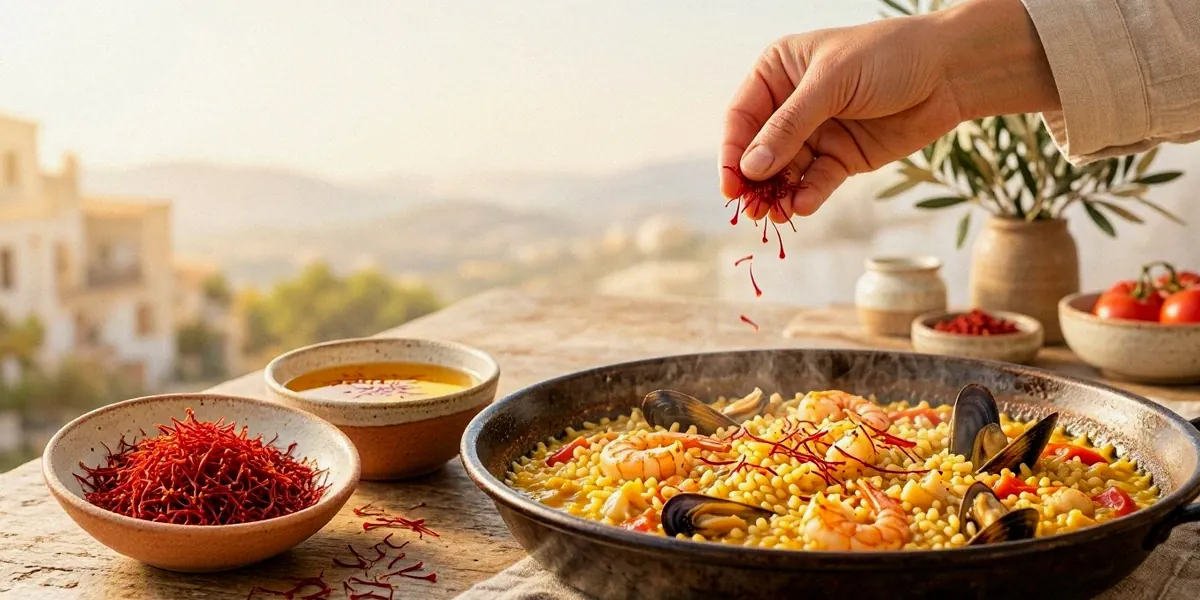
Paella valenciana is a classic Spanish dish that traditionally uses saffron, and it remains the best showcase for the spice. The saffron is added early, usually stirred into the hot stock before the rice goes in, so the grains absorb colour and flavour evenly. Arroz negro, with its dramatic squid-ink darkness, also relies on a small pinch of saffron to lift the deep, briny notes. Add it to the stock rather than sprinkling it over the rice at the end.
Soups, Stews, and Sauces
Beyond rice, saffron works beautifully in Spanish fish stews such as zarzuela, in chickpea and spinach dishes, and in rich almond sauces like romesco’s gentler cousins. It also lifts simple sauces for poultry and rabbit. Our advice is consistent: add it early in the cooking so it has time to infuse, and resist the urge to top up “just a little more” halfway through.
Common Mistakes to Avoid with Saffron
Even experienced cooks slip up with saffron. Here are the pitfalls we see most often, and how to sidestep them.
Overpowering Your Dish
Saffron is assertive. Using too much can make a dish taste soapy, medicinal, or slightly bitter, and there is no way to fix it once it is in. A generous pinch — roughly 15 to 20 threads — is plenty for a paella serving four to six people.
Falling for Fake Saffron
Some products sold as saffron in the UK contain safflower, marigold, or dyed fibres. If your saffron was suspiciously cheap, if it colours water instantly, or if it looks uniformly yellow, it is probably not real. Buying from Brindisa, Sous Chef, or a trusted local deli is the surest way to protect yourself. Quality matters more than quantity, and a small investment in genuine La Mancha saffron will transform your cooking far more than a large jar of cheap filler ever could.
FAQ
Can I use turmeric instead of saffron?
Turmeric will give you a yellow colour, but not the floral, honeyed flavour that defines Spanish dishes. Use it only as a colour substitute when saffron is unavailable, and expect a very different result.
How much saffron should I use per person?
For a paella or rice dish, we suggest roughly three to four threads per person. That is enough to perfume the whole pan without tipping into bitterness.
Does saffron powder work as well as threads?
Powdered saffron can be convenient but it loses aroma far faster and is easily adulterated. We always recommend whole threads, which you can crush yourself just before blooming.
Can I bloom saffron in cold water?
You can, but it will take much longer and release less flavour. Warm — not boiling — liquid is the sweet spot: it draws out colour and aroma without damaging the delicate compounds.
Where should I buy Spanish saffron in the UK?
Brindisa and Sous Chef are our go-to online stockists, and both carry PDO La Mancha saffron. Local Spanish delis and quality farmers’ markets are also excellent, as long as you can ask about provenance and packaging date.
Saffron deserves its reputation as Spain’s red gold, and once you start treating it properly — buying genuine La Mancha threads, storing them well, blooming them in warm liquid, and using a restrained pinch — you will taste the difference in every paella, stew, and rice dish you make. We encourage you to pick up a small jar from a trusted UK stockist this week, experiment with it in your own kitchen, and let a single precious pinch do the work of a whole shelf of spices. A modest investment in quality saffron is one of the smartest upgrades any home cook can make to their Spanish repertoire.




Post Comment